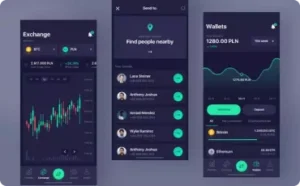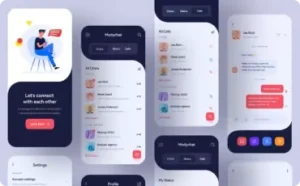
Custom mobile app development

Custom mobile app development

Briefly about this article

Kevuru Games is an active participant in the gaming industry. We are an outsourcing service provider specializing in various areas: game art, design and development. Our team of professionals helps global companies design and develop games of various sizes and difficulty levels. We are proud to partner with leading companies in the gaming industry who contribute to transformational entertainment projects.

With 8+ years in the gamedev world under the belt, we can state that this area changes at the speed of light. For that reason, we decided to highlight the latest trends in the world of game development in order to guide game developers and publishers to the products that are in demand in the market.

The gaming industry began about 50 years ago when the first video games were introduced to the first electronic displays. Since that time, many devices and inventions have appeared that correspond to the main achievements of computer technology. In addition, dozens of genres and millions of projects have emerged that affect this area of business. In this material, we’ll bring you a list of the top-selling games and share their success stories.

At the same time, the industry is determined by trends that change every year. 2020 is a very special year because of the many changes taking place on the global stage. Some of the most notable trends in the gaming industry are driven by the need to adapt to the COVID-19 pandemic and global restrictive measures. This made more people addicted to different games. To which ones and how many percent the gaming audience has increased, you will find out in this material prepared by our team.

In this report, you will find more details on:

The list of best-selling games in 2020: what is the demand for games?
The COVID-19 impact on the gaming industry: what changes?
The main factors of success: what affects?
Forecasts: who will be the next world leader?

The Latest Trends in the Gaming Industry: Top 10

1. Re-release of old games and remastered versions with new HD features and other capabilities

Microsoft and Sony plan to release new flagship consoles by the end of 2020. It will be the next generation of home consoles with an updated look and technical characteristics. So, hits will be released almost one after another for the army of game console fans. Consoles are among the most popular devices for gaming as well as other activities, especially among players around the world between the ages of 25 and 34. In the current generation of consoles, Sony’s PlayStation 4 significantly outperforms the Xbox One in sales, with 113.16 million units sold by Sony worldwide.

2. Re-release of old games and remastered versions with new HD features and other capabilities

Microsoft and Sony plan to release new flagship consoles by the end of 2020. It will be the next generation of home consoles with an updated look and technical characteristics. So, hits will be released almost one after another for the army of game console fans. Consoles are among the most popular devices for gaming as well as other activities, especially among players around the world between the ages of 25 and 34. In the current generation of consoles, Sony’s PlayStation 4 significantly outperforms the Xbox One in sales, with 113.16 million units sold by Sony worldwide.

3. Re-release of old games and remastered versions with new HD features and other capabilities

Microsoft and Sony plan to release new flagship consoles by the end of 2020. It will be the next generation of home consoles with an updated look and technical characteristics. So, hits will be released almost one after another for the army of game console fans. Consoles are among the most popular devices for gaming as well as other activities, especially among players around the world between the ages of 25 and 34. In the current generation of consoles, Sony’s PlayStation 4 significantly outperforms the Xbox One in sales, with 113.16 million units sold by Sony worldwide.

Minecraft Dungeons is basically Diablo with a Minecraft skin. Sure, it doesn’t mine the same mechanical depths as Diablo, and plays it safe with the formula instead of blazing its own path with bold Minecraft-inspired ideas, but it has all the fun combat, and loot it needs, and it’s accessible to just about anyone.

— taken from Minecraft Dungeons Review by IGN (short for the former name Imagine Games Network).

Rate please this article
5/5
Service Portfolio
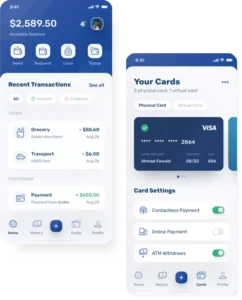
Digital ecosystem for smart financial monitoring and transaction management of all your bank accounts in one mobile app.
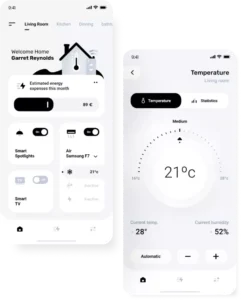
A building automated by Homely takes care of thousands of everyday tasks, without you even having to lift a finger. You can take control with the tap of a Touch switch or within the Homrly App on any smart device. At Homely, we’ve developed the most powerful smart home app.
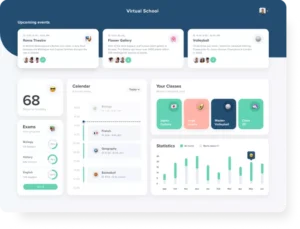
Web system for remote education adaptable for every kind of school or university all over the world.
Digital ecosystem for smart financial monitoring and transaction management of all your bank accounts in one mobile app.

Our Clients

FAQ

The entire development life cycle includes:


1. Pre-production. This is an advance preparation of concepts for a game. Primarily, a high concept is formulated – what is a game about? Besides, it is vital to specify game genres, features, plots, target audience, platforms, approximate schedules, marketing analysis, team requirements, and risk analysis. 


2. Design. All the game concepts and other elements of gameplay are worked out in detail at this stage. As a result, a clear game design document (GDD) with all the necessary details is created for the development team. 


3. Development. This is a stage when programming comes into the game development process. Games developers write code to implement all the ideas previously mentioned in GDD. 


4. Testing. Testers ensure that all the features are available and work correctly in the game. Even small changes to the code base can lead to unexpected changes in different parts of the game. So, it is crucial to test a game before its release.


Simply put, it is necessary to take an idea or concept for a game and develop, program, design, visualize, record, mix, produce, test, before launching a full game on the market.

The entire development life cycle includes:


1. Pre-production. This is an advance preparation of concepts for a game. Primarily, a high concept is formulated – what is a game about? Besides, it is vital to specify game genres, features, plots, target audience, platforms, approximate schedules, marketing analysis, team requirements, and risk analysis. 


2. Design. All the game concepts and other elements of gameplay are worked out in detail at this stage. As a result, a clear game design document (GDD) with all the necessary details is created for the development team. 


3. Development. This is a stage when programming comes into the game development process. Games developers write code to implement all the ideas previously mentioned in GDD. 


4. Testing. Testers ensure that all the features are available and work correctly in the game. Even small changes to the code base can lead to unexpected changes in different parts of the game. So, it is crucial to test a game before its release.


Simply put, it is necessary to take an idea or concept for a game and develop, program, design, visualize, record, mix, produce, test, before launching a full game on the market.

The entire development life cycle includes:


1. Pre-production. This is an advance preparation of concepts for a game. Primarily, a high concept is formulated – what is a game about? Besides, it is vital to specify game genres, features, plots, target audience, platforms, approximate schedules, marketing analysis, team requirements, and risk analysis. 


2. Design. All the game concepts and other elements of gameplay are worked out in detail at this stage. As a result, a clear game design document (GDD) with all the necessary details is created for the development team. 


3. Development. This is a stage when programming comes into the game development process. Games developers write code to implement all the ideas previously mentioned in GDD. 


4. Testing. Testers ensure that all the features are available and work correctly in the game. Even small changes to the code base can lead to unexpected changes in different parts of the game. So, it is crucial to test a game before its release.


Simply put, it is necessary to take an idea or concept for a game and develop, program, design, visualize, record, mix, produce, test, before launching a full game on the market.

The entire development life cycle includes:


1. Pre-production. This is an advance preparation of concepts for a game. Primarily, a high concept is formulated – what is a game about? Besides, it is vital to specify game genres, features, plots, target audience, platforms, approximate schedules, marketing analysis, team requirements, and risk analysis. 


2. Design. All the game concepts and other elements of gameplay are worked out in detail at this stage. As a result, a clear game design document (GDD) with all the necessary details is created for the development team. 


3. Development. This is a stage when programming comes into the game development process. Games developers write code to implement all the ideas previously mentioned in GDD. 


4. Testing. Testers ensure that all the features are available and work correctly in the game. Even small changes to the code base can lead to unexpected changes in different parts of the game. So, it is crucial to test a game before its release.


Simply put, it is necessary to take an idea or concept for a game and develop, program, design, visualize, record, mix, produce, test, before launching a full game on the market.